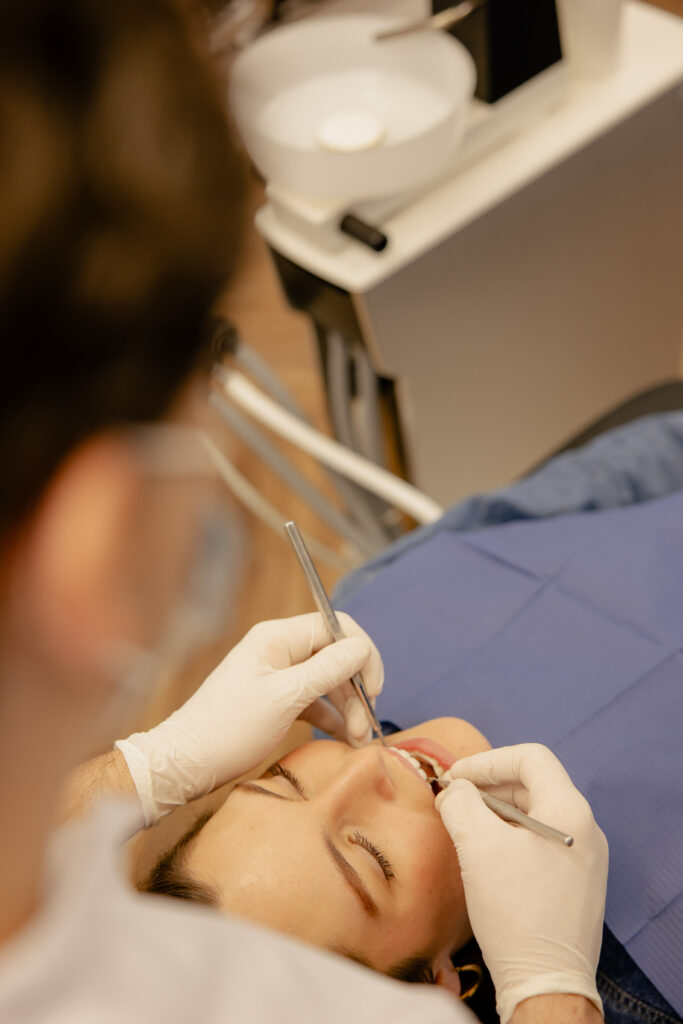
What are cavities?

Cavities, also known as dental caries, are caused by tooth decay. This process begins when bacteria in dental plaque convert sugars from food into acids. These acids erode the tooth enamel. When the enamel weakens, a small cavity can form in the tooth.

In the early stages, tooth decay often causes no symptoms. That is precisely why regular checkups are important, so that early cavities can be detected and treated in time.

mask

How do cavities form?

The mouth naturally contains bacteria. If plaque is not properly removed, these bacteria have the opportunity to multiply. Combined with sugars and acids from food, this can lead to enamel erosion and, ultimately, tooth decay.

Factors that can contribute to the development of cavities include:

  • inadequate or careless brushing

  • failing to clean between the teeth

  • foods and beverages high in sugar or acid

  • reduced saliva production

  • genetic susceptibility to tooth decay

Symptoms of cavities

Cavities don't always cause immediate pain. Possible signs include:

  • sensitivity to cold, hot, or sweet beverages

  • a throbbing or stabbing pain in a tooth

  • visible white or dark spots on the enamel

  • a rough or hollow sensation on the tongue

If you experience any symptoms, it is important to contact your dentist promptly.

Treatment of cavities

The treatment for tooth decay depends on the size and severity of the cavity.

Small holes

Early-stage tooth decay can sometimes be stabilized with targeted fluoride treatment and improved oral hygiene.

Larger holes

When the enamel and dentin are damaged, the cavity is usually treated with a filling to prevent further damage.

Severe tooth decay

If the decay has reached the tooth's nerve, a root canal may be necessary to save the tooth.

The dentist will always discuss with you in advance which treatment is appropriate for your situation.

Prevention is better than cure

Preventing cavities is an important part of preventive oral care. With good oral hygiene and regular checkups, the risk of tooth decay can be significantly reduced.

We recommend:

  • Brush twice a day with fluoride toothpaste

  • Daily cleaning between your teeth (flossing or using interdental brushes)

  • a varied diet with limited sugar intake

  • regular dental checkups

  • additional preventive care provided by a dental hygienist

Personal advice

Every mouth is different. During a checkup or appointment with the dental hygienist, you’ll receive personalized advice on how to maintain optimal oral health and reduce your risk of cavities.

Do you have questions about tooth decay or concerns about symptoms? Please feel free to contact us or schedule an appointment.